spacer 65
Poem of the Day | Top 30 | Poets | Shopping | Forums | Search | Comments
Today, on May 16th, 2008, the site contains 193 poets, 8,680 poems and 4,481 comments.
Biography of William Blake

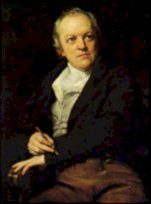
William Blake

William Blake (1757 - 1827)


British poet, painter, visionary mystic, and engraver, who illustrated and printed his own books. Blake proclaimed the supremacy of the imagination over the rationalism and materialism of the 18th century. He joined for a time the Swedenborgian Church of the New Jerusalem in London and considered Newtonian science to be superstitious nonsense. Misunderstanding shadowed his career as a writer and artist and it was left to later generations to recognize his importance.

Blake was born in London, where he spent most of his life. His father was a successful London hosier and attracted by the doctrines of Emmanuel Swedenborg. Blake was first educated at home, chiefly by his mother. His parents encouraged him to collect prints of the Italian masters, and in 1767 sent him to Henry Pars' drawing school. From his early years, he experienced visions of angels and ghostly monks, he saw and conversed with the angel Gabriel, the Virgin Mary, and various historical figures.

At the age of 14 Blake was apprenticed for seven years to the engraver James Basire. Gothic art and architecture influenced him deeply. After studies at the Royal Academy School, Blake started to produce watercolors and engrave illustrations for magazines. In 1783 he married Catherine Boucher, the daughter of a market gardener. Blake taught her to draw and paint and she assisted him devoutly. In 1774 Blake opened with his wife and younger brother Robert a print shop at 27 Broad Street, but the venture failed after the death of Robert in 1787. Blake's important cultural and social contacts included Henry Fuseli, Reverend A.S. Mathew and his wife, John Flaxman (1755-1826), a sculptor and draughtsman, Tom Paine, William Godwin, and Mrs Elizabeth Montagu (1720-1800), married to the wealthy grandson of the earl of Sandwich.

His early poems Blake wrote at the age of 12. His first book of poems, POETICAL SKETCHES, appeared in 1783 and was followed by SONGS OF INNOCENCE (1789), and SONGS OF EXPERIENCE (1794). His most famous poem, 'The Tyger', was part of his Songs of Experience. Typical for Blake's poems were long, flowing lines and violent energy, combined with aphoristic clarity and moments of lyric tenderness. He approved of free love, and sympathized with the actions of the French revolutionaries until the events of 1794 sickened him. In 1790 Blake engraved THE MARRIAGE OF HEAVEN AND HELL, a book of paradoxical aphorisms and his principal prose work. It expressed Blake's revolt against the established values of his time. "Prisons are built with stones of Law, brothels with bricks of Religion." Radically he sided with the Satan in Milton's Paradise Lost and attacked the conventional religious views in a series of aphorisms. But the poet's life in the realms of images did not plese his wife who once remarked: "I have very little of Mr. Blake's company. He is always in Paradise." Some of Blake's contemporaries called him a harmless lunatic.

The Blakes moved south of the Thames to Lambeth in 1790. During this time Blake began to work on his 'prophetic books', where he expressed his lifelong concern with the struggle of the soul to free its natural energies from reason and organized religion. He wrote THE VISIONS OF THE DAUGHTERS OF ALBION (1793), AMERICA: A PROPHESY (1793), THE BOOK OF URIZEN (1794), and THE SONG OF LOS (1795). Blake hated the effects of the Industrial Revolution in England and looked forward to the establishment of a New Jerusalem "in England's green and pleasant land." Between 1804 and 1818 he produced an edition of his own poem JERUSALEM with 100 engravings.

In 1800 Blake was taken up by the wealthy William Hayley, poet and patron of poets. The Blakes lived in Hayley's house at Felpham in Sussex, staying there for three years. At Felpham Blake worked on MILTON: A POEM IN TWO BOOKS, TO JUSTIFY THE WAYS OF GOD TO MEN. It was finished and engraved between 1803 and 1808. In 1803 Blake was charged at Chichester with high treason for having 'uttered seditious and treasonable expressions, such as "D-n the King, d-n all his sibjects..."' but was acquitted. In 1809 Blake had a commercially unsuccessful exhibition at the shop once owned by his brother. However, economic problems did not depress him, but he continued to produce energetically poems, aphorisms, and engravings. "The tigers of wrath are wiser than the horses of instruction," he wrote.

From 1818 Blake started to enjoy the admiration of a group of young disciples. Blake's last years were passed in obscurity, quarreling even with some of the circle of friends who supported him. Among Blake's later artistic works are drawings and engravings for Dante's Divine Comedy and the 21 illustrations to the book of Job, which was completed when he was almost 70 years old. Blake never shook off the poverty, in large part due to his inability to compete in the highly competitive field of engraving and his expensive invention that enabled him to design illustrations and print words at the same time.

Independent through his life, Blake left no debts at his death on August 12, 1827. He was buried in an unmarked grave at the public cemetery of Bunhill Fields. Wordsworth's verdict after Blake's death reflected many opinions of the time: "There was no doubt that this poor man was mad, but there is something in the madness of this man which interests me more than the sanity of Lord Byron and Walter Scott." Blake's influence grew through Pre-Raphealites and W.B. Yeats especially in Britain. His interest in legend was revived with the Romantics' rediscovery of the past, especially the Gothic and medieval. In the 1960s Blake's work was acclaimed by the Underground movement.


Biography by: 1911 Encyclopaedia Articles


132 Poems written by William Blake

The poems are by default sorted according to volume, but you can also choose to sort them alphabetically or by page views.

[Volume] | Alphabetically | Page Views | Comments | First Lines


Miscellaneous
And Did Those Feet In Ancient Time Comments and analysis of And Did Those Feet In Ancient Time by William Blake 1 Comment
Auguries Of Innocence Comments and analysis of Auguries Of Innocence by William Blake 2 Comments
Evening Star Comments and analysis of Evening Star by William Blake 2 Comments
Love's Secret Comments and analysis of Love's Secret by William Blake 10 Comments
The Land Of Dreams Comments and analysis of The Land Of Dreams by William Blake 2 Comments
An Imitation of Spenser
Blind Man's Buff
Broken Love Comments and analysis of Broken Love by William Blake 2 Comments
England! awake! awake! awake!
Eternity Comments and analysis of Eternity by William Blake 2 Comments
Fair Elanor
French Revolution, The (excerpt) Comments and analysis of French Revolution, The (excerpt) by William Blake 1 Comment
From Milton: And did those feet
Gwin King of Norway
Hear the Voice Comments and analysis of Hear the Voice by William Blake 1 Comment
How Sweet I Roam'd Comments and analysis of How Sweet I Roam'd by William Blake 1 Comment
I Heard an Angel Comments and analysis of I Heard an Angel by William Blake 1 Comment
I Rose Up at the Dawn of Day Comments and analysis of I Rose Up at the Dawn of Day by William Blake 1 Comment
I Saw a Chapel Comments and analysis of I Saw a Chapel by William Blake 1 Comment
I see the Four-fold Man Comments and analysis of I see the Four-fold Man by William Blake 1 Comment
If It Is True What the Prophets Write Comments and analysis of If It Is True What the Prophets Write by William Blake 1 Comment
Intorduction to the Songs of Experience
Introduction to the Songs of Innocence
Jerusalem
Jerusalem: England! awake! awake! awake!
Jerusalem: I see the Four-fold Man, The Humanity in deadly sleep
Love and Harmony Comments and analysis of Love and Harmony by William Blake 2 Comments
Mad Song Comments and analysis of Mad Song by William Blake 1 Comment
Milton: And did those feet in ancient time
Milton: But in the Wine-presses the Human Grapes Sing not nor Dance
Milton: The Sky is an Immortal Tent Built by the Sons of Los
Mock On, Mock On, Voltaire, Rousseau
My Spectre Around Me Comments and analysis of My Spectre Around Me by William Blake 1 Comment
Never Seek to Tell thy Love
Now Art Has Lost Its Mental Charms Comments and analysis of Now Art Has Lost Its Mental Charms by William Blake 1 Comment
Piping Down the Valleys Wild
Preludium to America Comments and analysis of Preludium to America by William Blake 1 Comment
Preludium to Europe
Proverbs of Hell (Excerpt from The Marriage of Heaven and H Comments and analysis of Proverbs of Hell (Excerpt from The Marriage of Heaven and H by William Blake 1 Comment
Reeds of Innocence Comments and analysis of Reeds of Innocence by William Blake 1 Comment
Samson
Silent, Silent Night Comments and analysis of Silent, Silent Night by William Blake 1 Comment
Sleep! Sleep! Beauty Bright Comments and analysis of Sleep! Sleep! Beauty Bright by William Blake 1 Comment
Song
Song: Memory, hither come Comments and analysis of Song: Memory, hither come by William Blake 1 Comment
The Birds Comments and analysis of The Birds by William Blake 2 Comments
The Book of Thel
The Book of Urizen (excerpts)
The Book of Urizen: Chapter I
The Book of Urizen: Chapter II
The Book of Urizen: Chapter III
The Book of Urizen: Chapter IV
The Book of Urizen: Chapter IX
The Book of Urizen: Chapter V
The Book of Urizen: Chapter VI
The Book of Urizen: Chapter VII
The Book of Urizen: Chapter VIII
The Book of Urizen: Preludium
The Caverns of the Grave I've Seen Comments and analysis of The Caverns of the Grave I've Seen by William Blake 1 Comment
The Everlasting Gospel
The Four Zoas (excerpt)
The French Revolution (excerpt)
The Grey Monk Comments and analysis of The Grey Monk by William Blake 1 Comment
The Grey Monk (Excerpts)
The Marriage of Heaven and Hell
The Marriage of Heaven and Hell (excerpt)
The New Jerusalem Comments and analysis of The New Jerusalem by William Blake 1 Comment
The Question Answered
The Sky is an Immortal Tent Built by the Sons of Los (from
The Song of Los
The Two Songs Comments and analysis of The Two Songs by William Blake 1 Comment
The Wild Flower's Song
Three Things to Remember Comments and analysis of Three Things to Remember by William Blake 1 Comment
To Autumn
To Morning
To Nobodaddy Comments and analysis of To Nobodaddy by William Blake 1 Comment
To Spring
To Summer
To The Accuser Who is The God of This World
To the Evening Star
To the Muses
To Thomas Butts
To Winter Comments and analysis of To Winter by William Blake 1 Comment
When Klopstock England Defied
Why Should I Care for the Men of Thames
Why Was Cupid a Boy
You Don't Believe Comments and analysis of You Don't Believe by William Blake 1 Comment
Songs of Experience
A Poison Tree Comments and analysis of A Poison Tree by William Blake 8 Comments
Ah! Sun-Flower Comments and analysis of Ah! Sun-Flower by William Blake 1 Comment
Earth's Answer Comments and analysis of Earth's Answer by William Blake 2 Comments
Holy Thursday (Experience) Comments and analysis of Holy Thursday (Experience) by William Blake 3 Comments
Infant Sorrow Comments and analysis of Infant Sorrow by William Blake 2 Comments
London Comments and analysis of London by William Blake 3 Comments
My Pretty Rose Tree
Nurses Song (Experience)
Songs Of Experience: Introduction
The Angel Comments and analysis of The Angel by William Blake 1 Comment
The Chimney-Sweeper (Experience) Comments and analysis of The Chimney-Sweeper (Experience) by William Blake 8 Comments
The Clod & The Pebble Comments and analysis of The Clod & The Pebble by William Blake 4 Comments
The Fly
The Garden Of Love Comments and analysis of The Garden Of Love by William Blake 18 Comments
The Human Abstract Comments and analysis of The Human Abstract by William Blake 1 Comment
The Lilly Comments and analysis of The Lilly by William Blake 1 Comment
The Little Girl Found
The Little Girl Lost
The Little Vagabond Comments and analysis of The Little Vagabond by William Blake 6 Comments
The School Boy Comments and analysis of The School Boy by William Blake 3 Comments
The Sick Rose Comments and analysis of The Sick Rose by William Blake 60 Comments
The Tyger Comments and analysis of The Tyger by William Blake 4 Comments
The Voice Of The Ancient Bard
To Tirzah Comments and analysis of To Tirzah by William Blake 2 Comments
The Little Boy Lost
Songs of Innocence
A Cradle Song
A Dream Comments and analysis of A Dream by William Blake 1 Comment
Holy Thursday (Innocence)
Infant Joy
Laughing Song Comments and analysis of Laughing Song by William Blake 1 Comment
Night
Nurse's Song (Innocence) Comments and analysis of Nurse's Song (Innocence) by William Blake 2 Comments
On Anothers Sorrow Comments and analysis of On Anothers Sorrow by William Blake 1 Comment
Songs Of Innocence: Introduction Comments and analysis of Songs Of Innocence: Introduction by William Blake 1 Comment
Spring
The Blossom Comments and analysis of The Blossom by William Blake 1 Comment
The Chimney Sweeper (Innocence) Comments and analysis of The Chimney Sweeper (Innocence) by William Blake 5 Comments
The Divine Image Comments and analysis of The Divine Image by William Blake 1 Comment
The Echoing Green Comments and analysis of The Echoing Green by William Blake 12 Comments
The Lamb Comments and analysis of The Lamb by William Blake 5 Comments
The Little Black Boy Comments and analysis of The Little Black Boy by William Blake 0 Comment
The Little Boy Found
The Shepherd Comments and analysis of The Shepherd by William Blake 1 Comment
Wright, David. English Romantic Verse. England: Penguin Books, 1968.
Several Questions Answered Comments and analysis of Several Questions Answered by William Blake 2 Comments


Books by William Blake
Please visit Amazon.com and support our site.
Click here for more books by William Blake.
Blake Info

Information
Copyright © 2003-2008 Gunnar Bengtsson, Poetry Connection. All Rights Reserved.