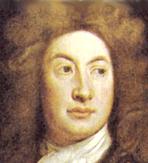
Biography
John Dryden (August 19, 1631 - May 12, 1700) was an influential British poet, literary critic, and playwright.
He was born in a village rectory near Oundle in Northamptonshire and educated at Westminster School and Trinity College, Cambridge. He was a professional writer throughout his life. His early plays, often heroic tragedy, met with highly variable success but served to promote his name and his Royalist sentiments. Arriving in London during the Protectorate, he attempted to capitalise on the Parliamentarian sympathies of his family, but failed to make much impact until the Restoration of King Charles II. His poem, Astrea Redux, in honour of this event, made him a name.
Dryden turned to the stage for a living, and soon became the most successful dramatist of the decade following the Restoration. He wrote in both of the dominant genres of the period: heroic verse drama and comedy of manners. He wrote for money, and claimed that the only one of his plays he cared for was All For Love (1677).
Read the full biography
The Indian Emperor is a wholly fictitious account of the conquest of Mexico by the Spaniards.
Dryden was a contentious personality, and frequently entered upon literary wars with other prominent writers. He savagely attacked playwright Thomas Shadwell in the poem MacFlecknoe, and attacked both Shadwell and Elkanah Settle in part two of Absalom and Achitophel.
By 1663, the year he was made a fellow of the Royal Society, he was prominent enough to be accepted as a suitable husband for Lady Elizabeth Howard, but his reputation was not really made until Annus Mirabilis, a celebration of the events of 1666. In 1668, he was appointed to succeed William Davenant as Poet Laureate, a post which he lost when King James II was deposed twenty years later. He continued to lead the way in Restoration comedy, his best known work being Marriage A-la-Mode (1672).
From the 1680s Dryden concentrated on poetry where his use of the rhymed couplet is considered brilliant, although he continued to write plays and composed several librettoes. In 1686 he converted to Catholicism. He also made some popular translations of Virgil's Aeneid and works by Horace, Ovid and Homer. He is buried in Westminster Abbey.
His eldest son, Charles Dryden, became chamberlain to Pope Innocent XII.
This article is licensed under the GNU Free Documentation License and uses material adapted in whole or in part from the Wikipedia article on John Dryden.
On Farewell, Ungrateful Traitor!
On Hidden Flame
On Song From Marriage-A-La-Mode